product name
Original price was: $18.00.$14.00Current price is: $14.00.

With over 30 years of food ingredient sourcing expertise and strong global manufacturer relationships, MBC Ingredients and Research Inc. delivers market insight, supply visibility, and dependable ingredient solutions to Canadian food manufacturers.
Xanthan gum is a high‑molecular‑weight polysaccharide produced through the fermentation of Xanthomonas campestris. It is widely used as a thickener, stabilizer, and suspending agent due to its excellent viscosity and stability across a wide range of temperatures and pH levels. In the food industry, xanthan gum is valued for improving texture, preventing ingredient separation, and enhancing mouthfeel. It is commonly added to sauces, dressings, dairy products, beverages, gluten‑free baked goods, and frozen foods. Because it maintains viscosity even under shear, it helps create smooth, stable formulations. Beyond food, xanthan gum is also used in cosmetics and industrial applications, but its primary market remains food processing and formulation.
Vitamin K2, or menaquinone, is a fat‑soluble vitamin essential for regulating how the body uses calcium. Its most important function is activating proteins such as osteocalcin and matrix Gla‑protein, which guide calcium into bones and teeth while preventing harmful deposits in blood vessels. This makes vitamin K2 crucial for maintaining strong bones and supporting long‑term cardiovascular health. Vitamin K2 is also involved in producing key clotting factors that prevent excessive
Naturally found in fermented foods, dairy, and certain animal products, vitamin K2 is widely used in dietary supplements and functional nutrition formulas. It is often combined with calcium and vitamin D to enhance absorption efficiency and improve bone mineralization, making it a key ingredient in products targeting bone strength and healthy aging.
Nisin is a natural antimicrobial peptide produced by Lactococcus lactis and widely used as a food preservative. As a bacteriocin, it is effective against many Gram‑positive bacteria, including Listeria and Clostridium, making it valuable for enhancing food safety and extending shelf life. Nisin works by disrupting bacterial cell membranes, preventing growth and spoilage. It is commonly applied in dairy products, processed meats, canned foods, beverages, and ready‑to‑eat items. Because it is heat‑stable and active at low pH, nisin performs well in acidic and pasteurized foods. It is recognized as safe in many countries and is frequently used in clean‑label formulations seeking natural preservation solutions.
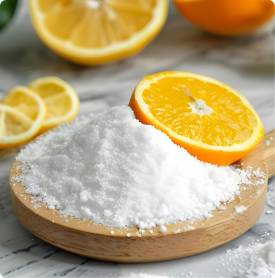
Citric acid is a natural organic acid widely found in citrus fruits and produced industrially through fermentation. It is valued for its sour taste, strong chelating ability, and excellent pH‑adjusting properties. Citric acid is used extensively in food and beverages as an acidulant, preservative, and flavor enhancer. It also plays important roles in pharmaceuticals, cosmetics, detergents, and industrial cleaning due to its ability to bind metal ions and improve stability.
In the market, citric acid is available in two main forms: monohydrate and anhydrous. Citric acid monohydrate contains one molecule of crystal water, giving it a slightly larger particle size and better flowability. Anhydrous citric acid contains no water, making it more stable in dry formulations and suitable for applications requiring low moisture.
L‑ascorbate‑2‑monophosphate (AMP) is a stabilized derivative of vitamin C created by binding ascorbic acid with a phosphate group. This modification protects vitamin C from oxidation, giving it significantly better stability in heat, light, and aqueous environments. Because of its enhanced durability, AMP is widely used in animal nutrition, aquaculture, and feed formulations where regular vitamin C would degrade quickly. It supports immune function, collagen synthesis, growth performance, and stress resistance in livestock and aquatic species. AMP is also valued in certain cosmetic and pharmaceutical applications, where its slow‑release properties provide a steady supply of bioavailable vitamin C for antioxidant protection and tissue repair.
Cocoa powder is a fine, dark brown ingredient made by grinding cocoa beans and removing most of the cocoa butter. Rich in natural cocoa solids and flavonoids, it delivers a characteristic chocolate aroma, mild bitterness, and antioxidant benefits. It is widely used in chocolate beverages, baked goods, ice cream, confectionery, and dessert mixes, providing color, flavor, and improved texture. In beverages, it creates a smooth, rich chocolate profile, while in bakery applications it enhances aroma and structure. Cocoa powder is also used in nutritional products for its polyphenols and natural stimulants such as theobromine.
We supply a complete range of cocoa powders, including natural, lightly alkalized, and fully alkalized dark varieties, covering colors from light brown to deep black. With multiple grades available, we support diverse applications and provide technical documentation and recommendations to help customers select the most suitable product.
Collagen peptides are short chains of amino acids derived from collagen, the main structural protein found in skin, bones, and connective tissues. Through enzymatic hydrolysis, collagen is broken down into smaller, easily absorbed peptides that the body can use more efficiently. Collagen peptides are widely used in nutrition, skincare, and functional health products because they support skin elasticity, joint mobility, and overall tissue repair. They are commonly added to supplements, protein powders, beverages, and beauty formulations. Due to their good solubility and neutral taste, collagen peptides integrate well into daily diets and are valued for promoting healthy skin, strong bones, and improved recovery in active individuals.
We currently offer two major categories of collagen peptides: fish collagen peptides and bovine collagen peptides. To meet evolving market demands, we are continuously expanding our portfolio and will introduce additional product types in the future.
Vitamin C, or ascorbic acid, is an essential water‑soluble nutrient and a powerful antioxidant that protects cells and supports immune health. It plays a key role in collagen synthesis, helping maintain healthy skin, bones, blood vessels, and connective tissues. Vitamin C also aids wound healing and enhances the absorption of iron from plant‑based foods. In addition, it contributes to the production of important hormones and neurotransmitters involved in normal metabolism and brain function.
We offer a full range of vitamin C ingredients to meet diverse formulation needs. Along with standard Vitamin C (L‑Ascorbic Acid), we supply key derivatives such as Sodium Ascorbate and Calcium Ascorbate. These stabilized forms provide improved bioavailability, greater stability, and wider application flexibility across food, nutrition, and pharmaceutical products, ensuring consistent quality and reliable performance.
There are no reviews yet.